The force multiplier: solving the public safety workforce crisis with AI
How to bridge the gap between rising resignation rates and the need for unified emergency response.
InFlow Analysis Executive Brief: "How predictive public safety is the new benchmark for unified emergency response and community engagement."

Download the Strategic Brief
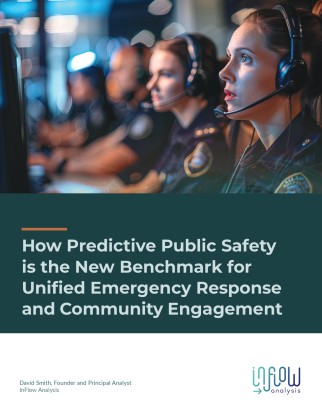
The public safety sector is facing a critical workforce crisis.
Police departments are seeing resignations up 47% since 2019, and 911 dispatcher vacancy rates have hit 30%. Agencies are being asked to do the impossible: improve community engagement and response times with fewer resources than ever before.
We cannot hire our way out of this crisis. We must innovate our way through it.
A new model of Predictive Public Safety is emerging. By leveraging intelligent platforms and open standards like the Model Context Protocol (MCP), agencies can turn their technology into a force multiplier—automating inter-agency workflows and creating a Common Operational Picture (COP) that saves seconds when they matter most.
Download this strategic brief to learn how to deploy a unified, CJIS-compliant platform that empowers your team to see the whole picture.
Key Takeaways:
- The dual workforce crisis: strategies to maintain operational excellence when facing a 47% increase in police resignations and 30% dispatcher vacancy rates.
- The 30% gap: strategies to maintain operational excellence despite high dispatcher vacancy rates.
- Defining the common operational picture: how to fuse 911 data, traffic feeds, and social media sentiment into a single, real-time view during a crisis.
- Automating inter-agency response: a look at how Agent-to-Agent (A2A) protocols allow Police, Fire, and Utility companies to coordinate work tickets without manual phone calls.
- The foundation of trust: how to innovate with AI while maintaining strict CJIS compliance and data governance.