Critical communications infrastructure for media and entertainment
Avaya Nexus provides a secure, resilient voice foundation for media and entertainment organizations where communication downtime can disrupt live productions, audience experiences, content operations, customer service, venue operations, and business continuity.

Mission-critical voice for media and entertainment
Across live events, broadcast operations, studios, production facilities, streaming services, venues, audience support, technical operations, and distributed media organizations, voice remains essential when an issue is urgent, complex, or time-sensitive.
Avaya Nexus modernizes enterprise voice without forcing a disruptive rip-and-replace, preserving operational control and existing infrastructure investments while introducing a cloud-native, zero-downtime architecture designed for complex and high-stakes environments.
The media and entertainment communications landscape has shifted
Media and entertainment are increasingly digital and always on.
Digital tools, AI, and direct-to-consumer services are transforming content creation, distribution, and monetization. Yet live operations still happen in real time.
Immediate voice communication remains essential when technical or venue incidents arise. As voice links to workflows, AI, and analytics, reliability, security, and integration become critical.
Avaya Nexus is engineered to meet these infrastructure needs.
When the show is live, communications become part of the production

What is critical communications infrastructure for media and entertainment?
Critical communications infrastructure is the modern evolution of enterprise voice for media and entertainment environments where communication failure can create immediate production, audience, operational, safety, or revenue consequences.
It is designed to support:
- Zero-downtime communications for critical operations
- High availability during live events, major launches, and peak demand
- Resilient communications across studios, venues, production sites, contact centers, and distributed operations
- Security, identity governance, and operational accountability
- Integration with notification, workflow, collaboration, radio, and operational systems
- Cloud-native scalability without unnecessarily disrupting existing infrastructure investments
For media and entertainment organizations, voice is more than another collaboration channel. It can become part of the infrastructure supporting the production and the audience experience.
The standard for critical media and entertainment communications
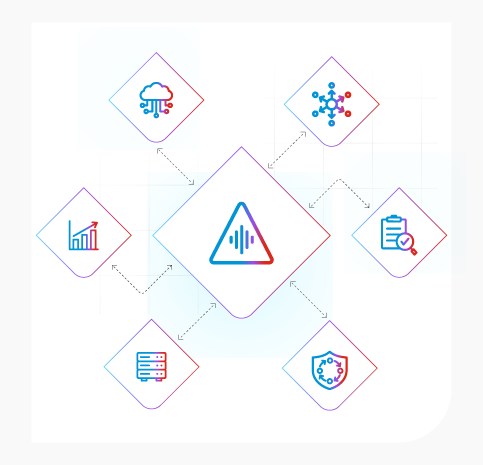
Avaya Nexus combines four foundational capabilities for critical media and entertainment communications: high resiliency, hardened security and compliance capabilities, deployment flexibility, and integration readiness.
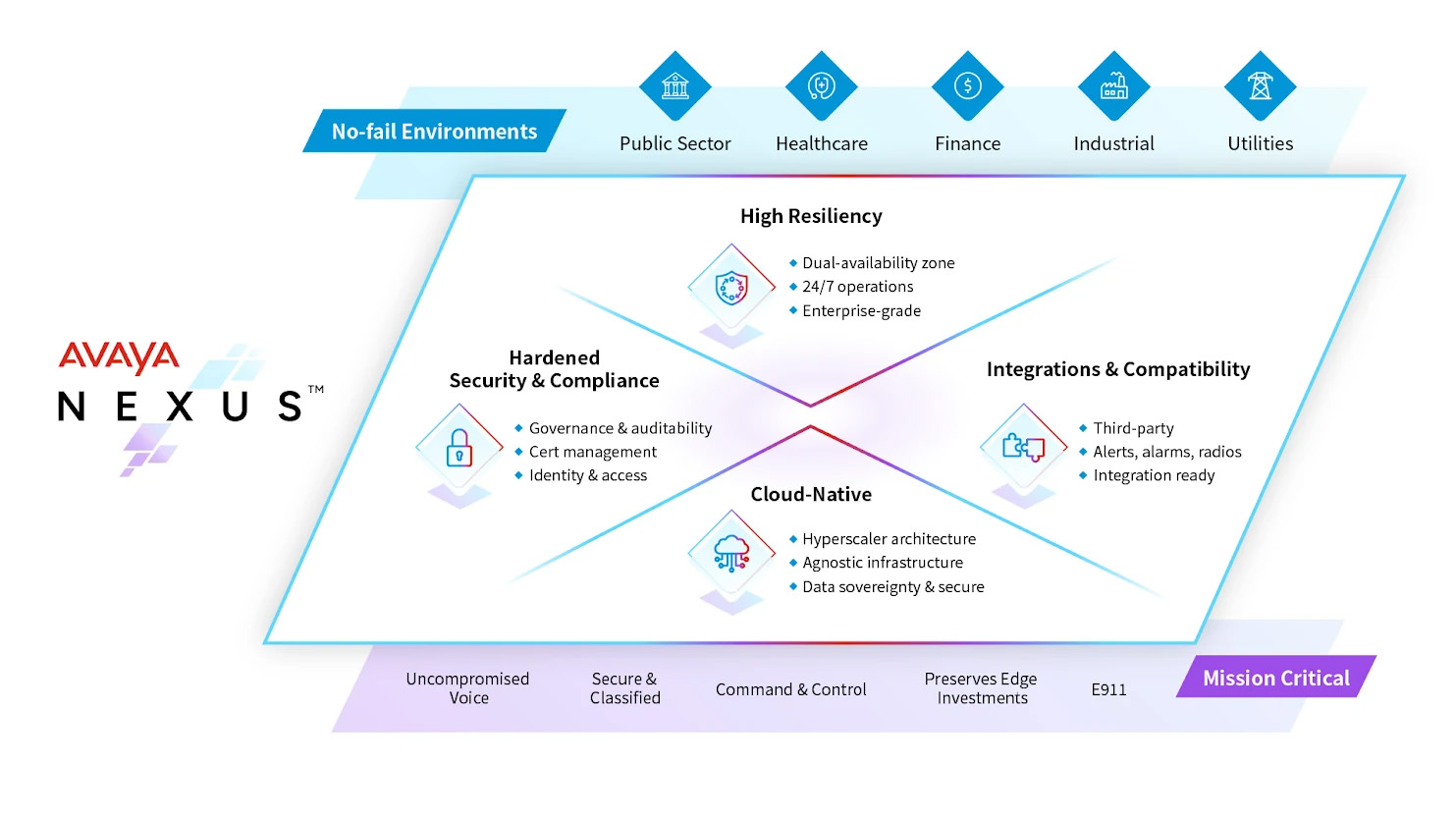
For media and entertainment environments where communications cannot fail
Avaya Nexus can support environments such as:
- Broadcast and media operations centers
- Studios and production facilities
- Live event operations
- Sports and entertainment venues
- Streaming and subscriber service operations
- Technical support centers
- Audience and customer contact centers
- Large entertainment campuses
These environments require more than bundled telephony. They require resilient infrastructure.
Not every media interaction needs to be treated as mission-critical. But communications tied to live production, event operations, audience safety, service availability, revenue, or time-sensitive technical response should be architected around the consequences of failure.
A routine internal meeting and a production-critical escalation may use the same communications environment, but they do not carry the same consequences.


What is your aging infrastructure costing you?
Aging voice systems increase risks beyond maintenance costs, including outages, security flaws, operational strain, production halts, and lost revenue. Evaluate your environment and construct a business case for upgrading with the Voice Infrastructure Impact Model.

Security, compliance, and certifications
Avaya Nexus is designed to meet rigorous regulatory and security standards required by regulated and mission-critical environments.

Encryption
TLS-encrypted signaling and SRTP-secured media

Identity & access management
Single Sign-On (SSO), Multi-Factor Authentication (MFA), role-based access controls

Certificate management
Centralized certificate lifecycle management and governance

Audit & monitoring
Logging, monitoring, and audit-ready operational controls

Deployment security
Support for data sovereignty and controlled deployment environments

Operational resilience
Zero-downtime architecture with redundancy and failover design
For media and entertainment Avaya Aura environments
Avaya Aura has long provided resilient enterprise voice for large and complex organizations. Avaya Nexus builds on that foundation for media and entertainment companies seeking zero-downtime architecture, strengthened security, cloud-native extensibility, and greater infrastructure flexibility without forcing the abandonment of proven communications investments.
Avaya Aura Communication Manager, Avaya Enablement Services, and Avaya Session Border Controller remain integral to the solution while Avaya Nexus introduces a modern, containerized architectural foundation.
“Unified communications: Not all seats are the same”
A routine meeting and a live event ops team have vastly different communication needs. Critical communications demand infrastructure built for the consequences of failure.

Frequently asked questions about Avaya Nexus for media and entertainment
What is critical communications infrastructure for media and entertainment?
Critical communications infrastructure is the secure, resilient communications foundation supporting media and entertainment activities where availability, security, integration, and operational control are essential.
Examples can include:
- Broadcast operations
- Live production
- Event operations
- Venue operations
- Technical support
- Streaming customer service
- Subscriber support
- Security
- Emergency coordination
- Business continuity
Unlike general-purpose unified communications platforms, critical communications infrastructure is designed for environments where communications failure can create immediate production, audience, operational, or financial consequences.
Does every media and entertainment communication need mission-critical voice?
No.
This distinction is important. Routine meetings, messaging, and everyday collaboration can be handled effectively by general-purpose collaboration platforms.
Critical voice becomes more relevant when an interaction supports:
- Live production
- Event operations
- Technical incident response
- Security
- Emergency response
- High-volume customer service
- Revenue-critical subscriber operations
- Business continuity
The objective is not to make every communication mission-critical. It is to identify the communications where failure matters and architect them accordingly.
Why is voice still important in modern media and entertainment?
Media companies are among the most digitally advanced organizations in the world. But when an operational problem occurs, people still need to communicate quickly.
Examples can include:
- A live broadcast problem
- Streaming service disruption
- Production equipment failure
- Venue incident
- Content delivery problem
- Subscriber outage
- Security event
- Major live event
Digital workflows can provide information. Voice can help people interpret that information, make decisions, and coordinate action in real time.
Is Avaya Nexus a broadcast intercom system?
No.
Avaya Nexus is critical enterprise voice infrastructure.
Broadcast intercom systems are specialized production technologies designed for communications among directors, camera operators, producers, technical crews, and other production personnel.
Avaya Nexus does not replace specialized broadcast intercom technology. It can provide resilient enterprise communications around the broader production, operations, support, and business environment.
Can Avaya Nexus support broadcast operations centers?
Yes.
Broadcast operations centers can require communication among:
- Engineering
- Network operations
- Production teams
- Transmission personnel
- Technical support
- Distribution teams
- Management
- External partners
Avaya Nexus can provide resilient enterprise voice infrastructure within these environments. Specialized broadcast production and distribution systems remain separate technologies.
Can Avaya Nexus support streaming services?
Yes.
Streaming companies may need resilient communications across:
- Customer care
- Technical operations
- Incident response
- Network operations
- Partner support
- Subscriber service
- Executive escalation
Avaya Nexus can provide the critical voice layer within this broader environment. Streaming delivery, content management, encoding, DRM, CDN, and subscription platforms remain separate technologies.
Can Avaya Nexus support major live streaming events?
Avaya Nexus can provide resilient communications for personnel supporting major digital events.
A large sports broadcast, concert, premiere, or global stream may create unusually high operational and customer demand.
Communications teams may need to coordinate:
- Technical operations
- Customer service
- Engineering
- Content operations
- Partners
- Leadership
The streaming infrastructure itself remains a separate technology environment.
Can Avaya Nexus support movie and television studios?
Yes.
Studios can operate environments spanning:
- Production facilities
- Corporate operations
- Post-production
- Security
- Technical support
- Facilities
- Distribution
- Customer and partner operations
Avaya Nexus can provide resilient enterprise voice across these environments. Specialized film, television, editing, production, and content-management systems remain separate technologies.
Can Avaya Nexus support video game companies?
Yes.
Game developers and publishers can operate global environments involving:
- Development studios
- Live operations
- Player support
- Security
- Ecommerce
- Technical support
- Community operations
- Global launches
Avaya Nexus can provide resilient enterprise communications where downtime carries meaningful operational or customer consequences.
Can Avaya Nexus support privacy requirements?
Yes.
Avaya Nexus provides capabilities related to:
- Encryption
- Identity governance
- Access controls
- Controlled deployment
- Logging
- Monitoring
These can support a broader privacy and cybersecurity strategy. Compliance with privacy regulations such as GDPR, CCPA, CPRA, or other requirements depends on the organization's complete data-processing environment and operating practices.
Can Avaya Nexus support global media companies?
Yes.
Avaya Nexus is designed for large and geographically distributed enterprise environments.
Its architecture can support communications spanning:
- Studios
- Offices
- Production facilities
- Contact centers
- Venues
- Operations centers
- Regional facilities
- International locations
Deployment design can account for security, infrastructure, data residency, sovereignty, and operational requirements in different regions.
What deployment options does Avaya Nexus support?
Avaya Nexus supports flexible deployment models, including dedicated cloud and on-premises configurations using supported hyperscaler environments.
This enables media and entertainment organizations to modernize critical communications while addressing infrastructure strategy, security, operational control, and regional requirements.
The Health Status Dashboard provides enhanced visibility into platform condition and service health, supporting proactive infrastructure oversight.
Can Avaya Nexus support multilingual audience service?
Yes.
Global media organizations and international events serve audiences across many languages.
Avaya Nexus provides the resilient voice foundation on which multilingual services can operate.
Organizations can combine voice infrastructure with:
- Multilingual agents
- AI translation
- Language routing
- Digital channels
- Customer context
Specific translation capabilities depend on the broader technologies integrated with the environment.
What is the connection between Avaya Infinity and Avaya Nexus for media and entertainment?
Avaya Infinity and Avaya Nexus address two connected media priorities.
Avaya Infinity helps orchestrate customer, fan, viewer, subscriber, and employee experiences across voice, digital engagement, AI, enterprise data, applications, and workflows.
Avaya Nexus provides the secure, resilient critical voice infrastructure beneath communications requiring continuous availability and operational control.
Together, they enable media organizations to innovate at the experience layer while protecting critical communications underneath it.
Does Avaya Nexus lock media companies into one AI provider?
No.
Avaya Nexus is critical communications infrastructure rather than a closed AI ecosystem.
Its role is to provide resilient voice within broader architectures that may include different AI, analytics, workflow, production, and customer experience technologies.
How does Avaya Nexus support existing Avaya Aura media customers?
Avaya Nexus provides a modernization path for Avaya Aura environments seeking cloud-native architecture, enhanced resilience, stronger security, and flexible infrastructure deployment.
Avaya Aura Communication Manager, Avaya Enablement Services, and Avaya Session Border Controller remain integral to the solution while Avaya Nexus introduces a modern, containerized architectural foundation.
This can help organizations modernize without unnecessarily disrupting studios, venues, contact centers, production facilities, and existing operations.
Resources for media and entertainment
When communications underpin live production, event operations, audience support, technical response, and business continuity, they cannot be treated as optional layers.
Avaya Nexus is built for media and entertainment environments where critical communications must simply work.
Contact us about
Avaya Nexus
Request a product preview