Critical communications infrastructure for automotive and mobility
Avaya Nexus provides a secure, resilient voice foundation for automotive and mobility organizations where communication downtime can disrupt roadside assistance, customer service, dealer operations, fleet support, service delivery, and business continuity.

Mission-critical voice for automotive and mobility
Across roadside assistance, customer care, dealer networks, service operations, fleet support, mobility services, connected vehicle programs, and distributed facilities, voice remains essential when an issue is urgent, complex, or operationally significant.
Avaya Nexus modernizes enterprise voice without forcing a disruptive rip-and-replace, preserving operational control and existing infrastructure investments while introducing a cloud-native, zero-downtime architecture designed for large, distributed, and high-stakes environments.
The automotive and mobility communications landscape has shifted
Automotive and mobility solutions are becoming highly connected. Advancements like EVs, telematics, digital retail, and autonomous systems are reshaping how users buy, operate, and service vehicles. Yet automation cannot replace dependable human communication.
During roadside strandings, charging failures, or fleet issues, quick connections remain vital. Communications also link operations, dealerships, call centers, field teams, security, and partners.
Voice is now integrated with customer data, workflows, analytics, and AI processes. This makes system availability, security, interoperability, voice quality, and control crucial. Avaya Nexus is specifically engineered for these requirements.
When mobility breaks down, communication becomes part of getting people moving again.

What is critical communications infrastructure for automotive and mobility?
Critical communications infrastructure is the modern evolution of enterprise voice for automotive and mobility environments where communication failure can create immediate customer, operational, safety, or financial consequences.
It is designed to support:
- Zero-downtime communications for critical mobility operations
- High availability during roadside incidents, demand surges, and infrastructure disruption
- Resilient communications across dealerships, service locations, operations centers, contact centers, and distributed facilities
- Security, identity governance, and operational accountability
- Integration with workflow, notification, customer experience, collaboration, and operational systems
- Cloud-native scalability without unnecessarily disrupting existing infrastructure investments
For automotive and mobility organizations, voice is more than another customer service channel. It can become part of the infrastructure that connects people with help when mobility is interrupted.
The standard for automotive and mobility critical communications
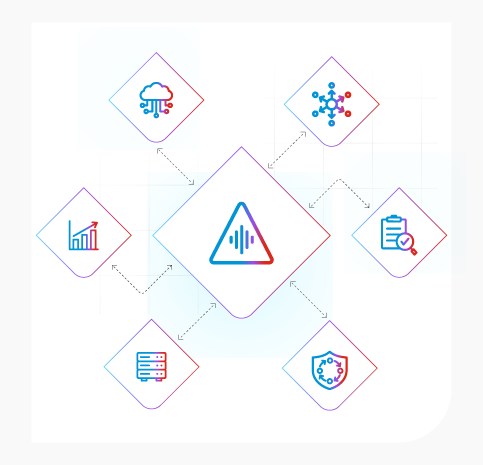
Avaya Nexus combines four foundational capabilities for critical automotive and mobility communications: high resiliency, hardened security and compliance capabilities, deployment flexibility, and integration readiness.
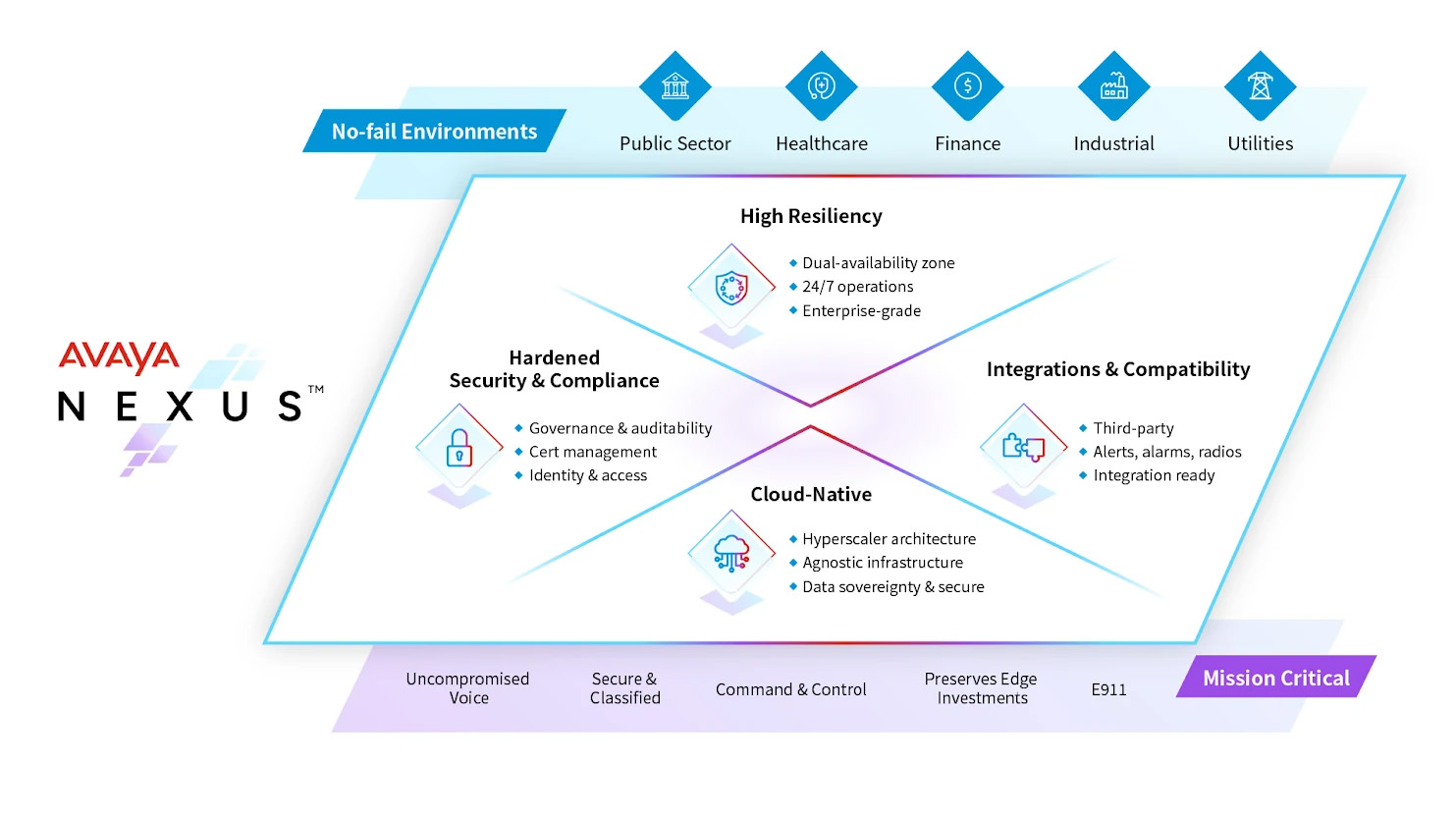
For automotive and mobility environments where communications cannot fail
Avaya Nexus can support environments such as:
- Roadside assistance operations
- Automotive customer contact centers
- Dealer and service networks
- Connected vehicle customer support
- Fleet and mobility operations
- EV customer and charging support
- Technical escalation centers
- Emergency and incident response
These environments require more than bundled telephony. They require resilient infrastructure.
"Strengthening resilient communications capabilities is essential to ensuring continuity of critical infrastructure operations.."
U.S. Department of Energy, Resilient Communication Systems, 2025


What is aging voice infrastructure costing your automotive organization?
Outdated voice systems risk security breaches, outages, operational delay, and lost revenue across roadside assistance, vehicle service, dealer operations, fleet support, and customer care. Assess your environment with the Voice Infrastructure Impact Model.

Security, compliance, and governance for automotive and mobility communications
Avaya Nexus is designed to support rigorous security and operational requirements across large and distributed enterprise environments.

Encryption
TLS-encrypted signaling and SRTP-secured media

Identity & access management
Single Sign-On (SSO), Multi-Factor Authentication (MFA), role-based access controls

Certificate management
Centralized certificate lifecycle management and governance

Audit & monitoring
Logging, monitoring, and audit-ready operational controls

Deployment security
Support for data sovereignty and controlled deployment environments

Operational resilience
Zero-downtime architecture with redundancy and failover design
For automotive Avaya Aura environments requiring critical voice infrastructure
Avaya Aura provides resilient voice for complex enterprises. Avaya Nexus enhances this for automotive and mobility firms, offering zero-downtime, cloud-native architecture, and improved security while preserving existing investments. Communication Manager, Enablement Services, and Session Border Controller remain key, supplemented by Nexus's containerized foundation.
“Unified communications: Not all seats are the same”
Routine meetings require different tools than helping stranded drivers; high-stakes mobility needs infrastructure built for consequence-of-failure scenarios.

Frequently asked questions about Avaya Nexus and critical communications infrastructure
What is critical communications infrastructure for automotive and mobility?
Critical communications infrastructure is the secure, resilient communications foundation supporting automotive and mobility activities where availability, security, integration, and operational control are essential.
Examples can include:
- Roadside assistance
- Connected vehicle support
- Customer service
- Dealer operations
- Fleet support
- Service escalation
- Emergency response
- EV support
- Mobility services
- Technical support
- Business continuity
Unlike general-purpose unified communications platforms, critical communications infrastructure is designed for environments where communication failure can create immediate customer, operational, safety, or financial consequences.
Does every automotive interaction require mission-critical voice?
No.
Many automotive interactions can be handled effectively through:
- Websites
- Mobile applications
- Messaging
- AI
- Self-service
- Dealer portals
- Automated notifications
The important distinction is the consequence of failure.
An interaction involving a routine service appointment has very different consequences from one involving a stranded driver, an urgent vehicle concern, a fleet outage, or an emergency.
Avaya Nexus enables organizations to identify higher-consequence communications and provide a more resilient foundation underneath them.
How is Avaya Nexus different from traditional UC platforms?
Traditional UC platforms are typically optimized for productivity and bundled collaboration features. Avaya Nexus is architected for regulated and high-stakes environments that require zero-downtime reliability, deployment sovereignty, alignment with compliance requirements, integration with broader collaboration ecosystems and operational systems such as notification, workflow, and radio.
What deployment options does Avaya Nexus support?
Avaya Nexus supports flexible deployment models, including dedicated cloud and on-premises via hyperscaler environments such as Azure, GCP, AWS, and OCI configurations. This flexibility enables organizations to meet regulatory, physical security, and data residency requirements while maintaining the availability and resilience expected of mission-critical voice.
Operational visibility also advances alongside the architecture. The Health Status Dashboard provides enhanced insight into platform condition and service health, supporting proactive oversight and infrastructure confidence.
What security controls are built into Avaya Nexus?
Security capabilities include:
- Encrypted signaling and media using TLS and SRTP
- Centralized identity and access management with SSO and MFA
- Role-based access controls
- Centralized certificate lifecycle management
- Audit logging and monitoring are designed to support compliance readiness
Can Avaya Nexus support regional or sovereign deployment requirements?
Yes. Avaya Nexus supports models that align with regional data residency and sovereignty requirements. Organizations can deploy in controlled environments that meet local regulatory mandates.
How scalable is Avaya Nexus?
Avaya Nexus is designed to scale across large, distributed enterprise environments. Its containerized microservices architecture supports high concurrency, geographic distribution, and enterprise-grade performance requirements.
Why is voice still important in an increasingly connected automotive industry?
Connected vehicles and digital services are transforming automotive experiences. But drivers still encounter situations that are difficult to resolve through an app or automated workflow.
Examples can include:
- Vehicle breakdowns
- Roadside emergencies
- Battery failures
- Flat tires
- Lockouts
- Complex technical problems
- Accident-related assistance
- Charging problems
- Travel disruption
In these situations, immediate access to a person can provide clarity, reassurance, and coordinated assistance.
How can Avaya Nexus support roadside assistance organizations?
Avaya Nexus can provide resilient critical voice infrastructure beneath roadside assistance environments. A broader roadside assistance journey may connect:
- Drivers
- Contact center agents
- Dispatchers
- Tow operators
- Battery service
- Repair providers
- Insurance services
- Emergency responders
- Customer applications
Avaya Nexus provides resilient voice when these workflows require live communication. Specific dispatch, location, tracking, membership, and roadside applications remain separate systems.
Can Avaya Nexus support vehicle breakdown assistance?
Yes.
Avaya Nexus can provide the resilient voice infrastructure beneath environments supporting vehicle breakdown assistance.
The broader workflow can involve customer identification, vehicle information, location, dispatch, towing, technical support, and service-provider coordination.
Those functions are handled by specialized applications and operational systems while Nexus provides critical communications infrastructure.
Can Avaya Nexus support connected vehicle services?
Yes.
Connected vehicle environments can generate customer interactions involving vehicle features, subscriptions, navigation, infotainment, software, connectivity, diagnostics, and other services.
Avaya Nexus can provide resilient voice infrastructure beneath customer support and escalation environments associated with those services.
The vehicle telematics and connected vehicle platforms remain separate technologies.
Can Avaya Nexus support automotive customer contact centers?
Yes. Avaya Nexus can provide the resilient voice foundation underneath automotive customer experience environments. Organizations can combine that foundation with:
- Digital channels
- AI
- CRM
- Vehicle information
- Dealer information
- Workflow automation
- Intelligent routing
- Customer authentication
- Analytics
This allows the customer experience layer to evolve while maintaining a resilient critical voice foundation underneath it.
Can Avaya Nexus support automotive dealerships?
Yes. Dealerships increasingly combine physical and digital customer experiences. Customers may begin online and then interact with dealership personnel regarding:
- Vehicle availability
- Test drives
- Financing
- Trade-ins
- Delivery
- Service
- Parts
- Warranty issues
Avaya Nexus can provide resilient communications beneath these interactions while CRM, dealer management, ecommerce, and customer experience applications provide the broader workflow.
Why does site survivability matter for automotive organizations?
A dealer, service center, fleet location, or roadside operations facility may continue serving customers even if its connection with centralized infrastructure becomes unavailable. Employees may still need to contact:
- Customers
- Other employees
- Emergency services
- Service providers
- Management
- Technical experts
Location survivability can help preserve essential communications while broader connectivity is restored.
Can Avaya Nexus support automotive technical assistance centers?
Yes. Technical assistance centers can help dealers and field technicians resolve complex vehicle issues. These interactions may require:
- Vehicle details
- Technical documentation
- Diagnostic information
- Engineering expertise
- Dealer context
- Escalation
Avaya Nexus can provide the resilient voice infrastructure beneath these technical conversations while knowledge and diagnostic systems provide the specialized information.
Can Avaya Nexus support fleet operations?
Yes. Fleet organizations may manage:
- Vehicles
- Drivers
- Dispatchers
- Maintenance
- Customer operations
- Logistics
- Safety personnel
- Field service
Avaya Nexus can provide resilient enterprise voice supporting these communications. Fleet management, routing, GPS, telematics, and dispatch systems remain separate applications.
Can Avaya Nexus support transportation network and mobility services?
Yes.
Mobility services can involve customers, drivers, dispatch, operations personnel, customer care, safety teams, and field support.
Avaya Nexus can provide resilient enterprise voice within these environments.
Specialized trip matching, routing, GPS, driver management, and payment applications remain separate technologies.
Can Avaya Nexus support automotive manufacturing?
Yes. Automotive manufacturers operate complex environments spanning:
- Assembly plants
- Engineering facilities
- Warehouses
- Logistics
- Dealer networks
- Customer service
- Technical support
- Corporate offices
Avaya Nexus can provide resilient enterprise voice across these environments. Specialized manufacturing, industrial control, plant safety, and OT technologies remain separate systems.
Can Avaya Nexus support disaster recovery?
Avaya Nexus can support the communications layer of a broader disaster recovery architecture through:
- Redundancy
- Failover
- Geographic distribution
- Service isolation
- Deployment flexibility
Automotive disaster recovery also extends across manufacturing, customer applications, dealerships, fleet systems, data, networks, facilities, and employees. Nexus should therefore be considered one component of the overall resilience architecture.
Can Avaya Nexus help during severe weather events?
Yes. Severe weather can simultaneously affect:
- Drivers
- Roadside assistance demand
- Dealerships
- Vehicle fleets
- Employees
- Contact centers
- Transportation networks
- Facilities
Avaya Nexus provides resilient communications infrastructure designed around redundancy, failover, survivability, and distributed operations. This can support communications continuity while the broader organization responds to the event.
Can Avaya Nexus support automotive cybersecurity strategies?
Yes. Avaya Nexus provides communications security capabilities including:
- TLS-encrypted signaling
- SRTP-secured media
- Centralized identity management
- Single Sign-On
- Multi-Factor Authentication
- Role-based access controls
- Certificate lifecycle management
- Logging and monitoring
- Controlled deployment
These capabilities can support the broader cybersecurity architecture of automotive and mobility organizations. Cybersecurity depends on the complete environment, including enterprise IT, connected vehicle platforms, applications, networks, endpoints, people, processes, and third parties.
Does Avaya Nexus require automotive companies to move critical voice to public cloud?
No. Avaya Nexus supports flexible deployment models, including dedicated cloud and on-premises configurations using supported hyperscaler environments. This enables organizations to select infrastructure strategies based on:\
- Security
- Operational control
- Data residency
- Existing infrastructure
- Availability
- Regional requirements
Modernization does not require every critical communications workload to move into the same deployment architecture.
What deployment options does Avaya Nexus support?
Avaya Nexus supports flexible deployment models, including dedicated cloud and on-premises configurations using supported hyperscaler environments such as Azure, Google Cloud, AWS, and Oracle Cloud Infrastructure.
This enables automotive and mobility organizations to modernize critical communications while addressing infrastructure strategy, security, operational control, and regional requirements.
The Health Status Dashboard provides enhanced visibility into platform condition and service health, supporting proactive infrastructure oversight.
Can Avaya Nexus support multi-brand automotive organizations?
Yes.
Automotive groups may operate multiple vehicle brands, mobility brands, financial services businesses, dealer programs, and customer service organizations.
Avaya Nexus can provide a common resilient voice foundation while individual brands retain distinct customer experiences, workflows, applications, and business processes.
Can Avaya Nexus support phased automotive modernization?
Yes. Automotive organizations may need to modernize incrementally because of:
- Plant schedules
- Dealer refresh cycles
- Application dependencies
- Regional requirements
- Contact center programs
- Infrastructure lifecycles
- Contract expirations
- Mergers and acquisitions
Avaya Nexus supports deployment flexibility and preservation of key existing investments. This enables organizations to modernize critical communications according to business priorities rather than a forced enterprise-wide migration.
How does Avaya Nexus support existing Avaya Aura automotive customers?
Avaya Nexus provides a modernization path for Avaya Aura environments seeking cloud-native architecture, enhanced resilience, stronger security, and flexible infrastructure deployment.
Avaya Aura Communication Manager, Avaya Enablement Services, and Avaya Session Border Controller remain integral to the solution while Avaya Nexus introduces a modern, containerized architectural foundation.
This can help automotive organizations modernize without unnecessarily disrupting dealer, contact center, manufacturing, service, and operational environments.
What is the connection between Avaya Infinity and Avaya Nexus for automotive and mobility?
Avaya Infinity and Avaya Nexus address two connected automotive priorities. Avaya Infinity helps orchestrate customer and employee experiences across voice, digital engagement, AI, enterprise data, applications, and workflows.
Avaya Nexus provides the secure, resilient critical voice infrastructure beneath communications requiring continuous availability and operational control.
Together, they can help automotive and mobility organizations create increasingly intelligent digital experiences while protecting the critical human connection underneath them.
What role does AI play with Avaya Nexus for automotive and mobility?
Avaya Nexus provides the resilient communications foundation that can support AI-enabled capabilities such as:
- Transcription
- Summarization
- Translation
- Speech analytics
- Intent detection
- Keyword detection
- Automated workflows
- Employee assistance
- Intelligent escalation
As automotive companies introduce AI into customer service, roadside assistance, technical support, dealerships, and mobility operations, the quality, continuity, and governance of voice communications feeding those systems become increasingly important.
Can AI handle roadside assistance?
AI can potentially help automate many parts of a roadside assistance journey. For example, AI and workflow technologies could help:
- Identify the customer
- Determine location
- Gather vehicle information
- Understand the problem
- Create a service request
- Provide status updates
- Connect with dispatch
But some roadside situations require human judgment. A driver may be frightened, uncertain, in an unsafe location, or dealing with circumstances that do not match a standard workflow. The best architecture allows automation to handle the predictable while preserving immediate human access for the unpredictable.
Can Avaya Nexus support agentic AI workflows?
Avaya Nexus can provide resilient voice within broader workflows where AI agents, enterprise applications, vehicles, customers, employees, and service providers interact. For example, an AI-enabled roadside workflow could:
- Identify the driver
- Retrieve vehicle context
- Determine location
- Diagnose the likely service need
- Initiate dispatch
- Update the customer
- Escalate to a human specialist when needed
When that workflow reaches a critical human conversation, Avaya Nexus can provide the communications infrastructure underneath it. Specific agentic capabilities depend on the broader automotive and enterprise architecture
Can Avaya Nexus support multilingual automotive customer service?
Yes.
Global automotive organizations serve drivers across languages, countries, and cultures. Avaya Nexus provides the resilient voice foundation on which multilingual capabilities can operate. Organizations can combine voice infrastructure with:
- AI translation
- Multilingual agents
- Language routing
- Customer context
- Digital channels
Specific language and translation capabilities depend on the broader customer experience technologies integrated with the environment.
Can Avaya Nexus support transportation operations beyond automotive?
Yes. Avaya Nexus is designed for large and distributed environments, including transportation systems. The same critical communications principles can apply to organizations involved in:
- Ground transportation
- Bus services
- Fleet operations
- Rental transportation
- Mobility services
- Logistics
Specific operational and safety requirements should be evaluated for each transportation environment.
Resources for regulated industries
When communications underpin roadside assistance, connected services, dealer operations, fleet response, and customer trust, they cannot be treated as optional layers.
Avaya Nexus is built for automotive and mobility environments where critical communications must simply work.
Contact us about
Avaya Nexus
Request a product preview