Critical communications infrastructure for life sciences and pharmaceuticals
Avaya Nexus provides a secure, resilient voice foundation for pharmaceutical, biotechnology, and life sciences organizations where communication downtime can disrupt patient support, medical information, pharmacovigilance, manufacturing, quality operations, supply chains, and business continuity.

Mission-critical voice for life sciences and pharmaceuticals
Across medical information centers, patient support programs, pharmacovigilance operations, manufacturing facilities, quality teams, clinical operations, supply chains, and global contact centers, voice remains essential when information is urgent, sensitive, regulated, or operationally significant.
Avaya Nexus modernizes enterprise voice without forcing a disruptive rip-and-replace, preserving operational control and existing infrastructure investments while introducing a cloud-native, zero-downtime architecture designed for regulated and high-stakes environments.
The life sciences communications landscape has shifted
Life sciences organizations are becoming increasingly digital, connected, automated, and AI-enabled.
Cloud applications, digital patient services, decentralized trials, intelligent manufacturing, analytics, automation, AI, connected laboratories, and increasingly sophisticated supply chains are changing how therapies are researched, manufactured, delivered, supported, and monitored.
But when a healthcare professional needs urgent medical information, a patient reports a potential adverse event, a manufacturing issue needs escalation, or a critical supply interruption occurs, people still need to communicate immediately.
Voice is also increasingly connected to case management, documentation, quality systems, safety databases, CRM, analytics, transcription, automation, and AI-supported workflows. That makes reliability, security, integration, voice quality, governance, and operational control more important than ever. Avaya Nexus is designed for these infrastructure-level requirements.
"The continuity of government services depends on a host of resilient and secure communications, from processing benefits to coordinating emergency logistics. We're proud to partner with an industry stalwart like Avaya leading with the innovation needed to ensure our most-mission-critical connections are reliably consistent for the government and public when they are needed most."
Michael Hanke Section Chief, Telecom Operations, U.S. Immigration and Customs Enforcement

What is critical communications infrastructure in life sciences?
Critical communications infrastructure is the modern evolution of enterprise voice for life sciences environments where communication failure can create immediate patient, regulatory, operational, quality, or business consequences.
It is designed to support:
- Zero-downtime communications for critical life sciences operations
- High availability during safety events, product issues, demand surges, and infrastructure disruption
- Resilient communications across manufacturing sites, research facilities, service centers, and global operations
- Security, identity governance, and operational accountability
- Integration with case management, notification, workflow, collaboration, quality, and enterprise systems
- Cloud-native scalability without unnecessarily disrupting existing infrastructure investments
For life sciences organizations, voice is more than an employee collaboration channel. It can become part of the infrastructure supporting regulated operations and critical human interactions.
The standard for critical life sciences communications
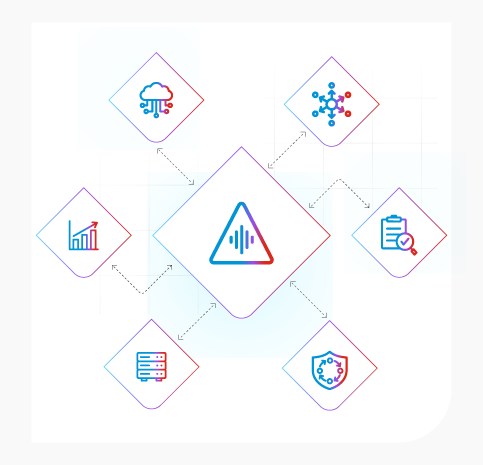
Avaya Nexus combines four foundational capabilities for critical life sciences communications: high resiliency, hardened security and compliance capabilities, deployment flexibility, and integration readiness.
For life sciences environments where communications cannot fail
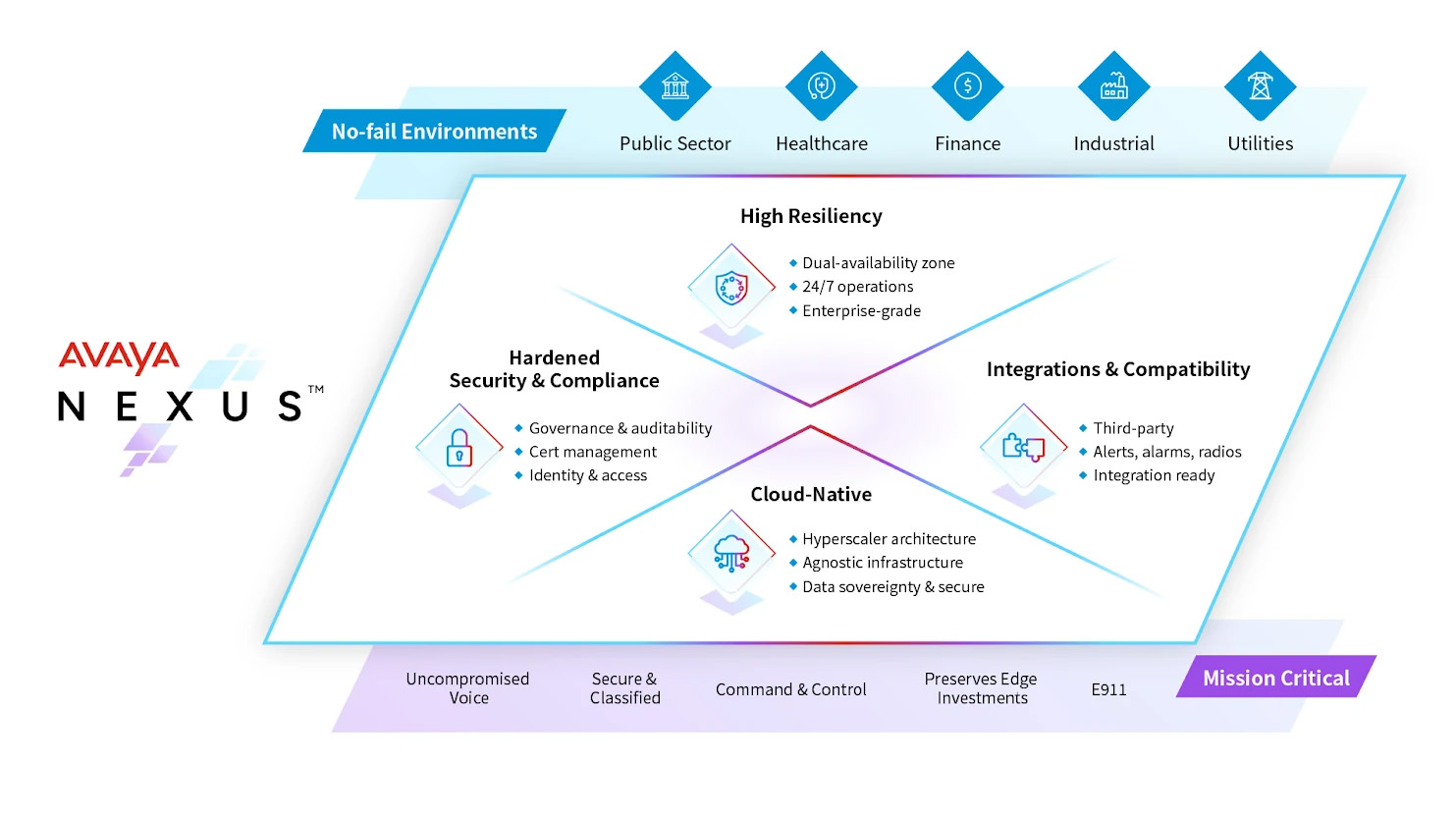
Avaya Nexus can support environments such as:
- Medical information contact centers
- Patient support programs
- Pharmacovigilance and drug safety operations
- Pharmaceutical manufacturing
- Quality and compliance operations
- Clinical research and trial support
- Supply chain and distribution operations
- Biotechnology and research facilities
These environments require more than bundled telephony. They require resilient infrastructure.
Not every life sciences communication needs to be treated as mission-critical. But communications involving patient safety, adverse events, product quality, manufacturing disruption, regulated processes, or time-sensitive healthcare information should be architected around the consequences of failure.
"Strengthening resilient communications capabilities is essential to ensuring continuity of critical infrastructure operations.."
U.S. Department of Energy, Resilient Communication Systems, 2025

What is aging voice infrastructure costing your life sciences organization?
Outdated voice systems introduce risks that extend beyond maintenance expense. Use the Voice Infrastructure Impact Model to evaluate your current environment and build a data-backed case for modernization.
Security, compliance, and governance for life sciences communications
Avaya Nexus is designed to support rigorous security and operational requirements in regulated and high-stakes environments.

Encryption
TLS-encrypted signaling and SRTP-secured media.

Identity and access management
Single Sign-On, Multi-Factor Authentication, and role-based access controls.

Certificate management
Centralized certificate lifecycle management and governance.

Audit and monitoring
Logging, monitoring, and audit-ready operational controls.

Deployment security
Support for controlled deployment, data residency, sovereignty, and organizational infrastructure requirements.

Operational resilience
Zero-downtime architecture with redundancy and failover design.
For life sciences Avaya Aura environments
Avaya Aura has long provided resilient enterprise voice for many of the world's largest and most complex organizations.
Avaya Nexus builds on that foundation for pharmaceutical and life sciences companies seeking zero-downtime architecture, strengthened security, cloud-native extensibility, and greater infrastructure flexibility without forcing the abandonment of proven communications investments.
Avaya Aura Communication Manager, Avaya Enablement Services, and Avaya Session Border Controller remain integral to the solution while Avaya Nexus introduces a modern, containerized architectural foundation.

“Unified communications: Not all seats are the same”
Hear how unified communications are evolving in ways that are mission-critical to the well-being of our communities.

Frequently asked questions about Avaya Nexus for life sciences and pharmaceuticals
What is critical communications infrastructure in life sciences?
Critical communications infrastructure refers to a secure, resilient voice foundation designed for life sciences environments where availability, governance, and operational control are mandatory. Avaya Nexus supports high-stakes activities such as medical information, patient support, pharmacovigilance, manufacturing, quality, supply chain, and emergency response.
What makes communications mission-critical in pharmaceuticals?
Mission-critical communications must remain available during emergencies, demand surges, infrastructure disruptions, and operational incidents. In life sciences, they may support adverse-event intake, product complaints, manufacturing coordination, quality investigations, patient services, and supply-chain response.
How is Avaya Nexus different from traditional UC platforms?
Traditional unified communications platforms generally focus on productivity and collaboration. Avaya Nexus is architected for regulated and high-stakes environments requiring resilient voice, deployment flexibility, operational control, site survivability, and integration with business, quality, safety, and operational systems.
Can Avaya Nexus support regulated life sciences workflows?
Yes. Avaya Nexus provides the resilient voice foundation beneath workflows such as medical information, pharmacovigilance, patient support, product complaints, clinical operations, quality, manufacturing, and supply-chain coordination. Specialized applications and trained personnel remain responsible for regulated decisions, records, and reporting.
Is Avaya Nexus a pharmacovigilance, quality, or clinical trial system?
No. Avaya Nexus is communications infrastructure, not a pharmacovigilance database, Quality Management System, Laboratory Information Management System, or Clinical Trial Management System. It supports the people and communications surrounding those specialized systems.
Can Avaya Nexus support manufacturing, laboratories, and quality operations?
Yes. Avaya Nexus connects production, quality, engineering, maintenance, laboratories, warehouses, facilities, and leadership across distributed environments. Specialized manufacturing, laboratory, process-control, and quality applications remain separate technologies.
Does Avaya Nexus make a pharmaceutical company compliant?
No. No communications platform independently makes an organization GxP, CGMP, 21 CFR Part 11, HIPAA, GDPR, or otherwise compliant. Avaya Nexus provides security, resilience, access governance, logging, and monitoring capabilities that can support a broader validated and controlled environment.
Does Avaya Nexus support zero-downtime operations?
Yes. Avaya Nexus is architected for continuous service through redundancy, failover, distributed deployment, and site survivability. These capabilities help sustain critical communications during maintenance, connectivity loss, infrastructure disruption, and demand surges.
What deployment options does Avaya Nexus support?
Avaya Nexus supports flexible deployment models, including dedicated cloud and on-premises configurations through supported hyperscaler environments such as Azure, GCP, AWS, and OCI. This flexibility helps organizations address security, validation, data residency, infrastructure, and operational-control requirements.
Operational visibility also advances alongside the architecture. The Health Status Dashboard provides enhanced insight into platform condition and service health, supporting proactive oversight.
What security controls are built into Avaya Nexus?
Security capabilities include:
- TLS-encrypted signaling and SRTP-secured media
- Centralized identity and access management with SSO and MFA
- Role-based access controls
- Certificate lifecycle management
- Logging and monitoring
- Controlled deployment and operational governance
These controls can support a broader life sciences security and compliance strategy.
Can Avaya Nexus support global and distributed life sciences operations?
Yes. Avaya Nexus is designed for geographically distributed environments, including research centers, manufacturing sites, laboratories, contact centers, patient services, medical information teams, and corporate locations. Its architecture can support global, multilingual, outsourced, and follow-the-sun operations.
How does Avaya Nexus support resilience and business continuity?
Avaya Nexus supports the communications layer of a broader resilience strategy through redundancy, failover, geographic distribution, service isolation, and location survivability. This can help organizations maintain essential communications during network failures, cyber incidents, facility outages, severe weather, and supply-chain disruptions.
How does Avaya Nexus support Avaya Aura customers?
Avaya Nexus provides a modernization path for Avaya Aura environments seeking a cloud-native, containerized, and infrastructure-flexible architecture. Avaya Aura Communication Manager, Avaya Enablement Services, and Avaya Session Border Controller remain integral to the solution, helping organizations modernize while preserving key investments and integrations.
Resources for regulated industries
When communications underpin life-safety, compliance, or operational continuity, they cannot be treated as optional layers.
Avaya Nexus is built for organizations where communications must simply work.
Contact us about
Avaya Nexus
Request a product preview